We are an unlikely couple. Me, twenty-three and adrift. The House, so planted in the earth, its walls sagging from decades of rain. When I move in, I worry I’ll find ghosts: not only the spirits of my ngin-ngin and yeh-yeh, but the spectres of other things lost to time.
The BIPOC Art ecosystem is a creative environment that is inspired by the structures, functions, processes, and symbiotic relationships found on the land where we live. As well, the ecosystem honours the wisdom and teachings of the host nations on unceded territories to which we (Karmella + Lexi) are uninvited guests. We are a part of centuries of microscopic transformations and changes, and we carry on the work of our ancestors as we centre art and community-building in the continuous fight for liberation, sovereignty, and environmental justice.
I Can Feel Him Breathing is the honourable mention for the 2021 Creative Non-Fiction Contest, as selected by Judge Dr. Njoki Wane. _____________ In the morning I stand in front of the bedroom closet, half-dressed, wrestling with the sliding door. The door won’t...
My introverted grandfather used a code to let my extraverted grandmother know when he was running out of steam at parties: fists by his side meant he had some energy; one fist in the air, spotted across the room, meant he was running on steam; both raised above his head meant he was finished and had no energy left for socialization.
Amidst all the swirling anxieties of the pandemic, I had almost forgotten I was brown. I had forgotten that the eyes looking out from above my mask were deep inky pools which so often failed to reflect familiarity and belonging.I had forgotten that, while my hands were gloved and hidden, my sepia arms betrayed my origins in a sun-washed and sun-dried land.
from LooseLeaf Magazine In 2015 I had a wild dream to start a publication for pan-Asian writers and artists, and that winter, in partnership with a bunch of equally naive and down-for-anything Asian creatives, LooseLeaf Magazine emerged. Like a lot of other grassroots...
“Queer relationships can save lives, not just romantic ones, but platonic friendships, too. Especially because for so many queer people, our families may not know how to affirm or see us.”
Who “I” am is entangled with a host of others, not just other humans and their stories, transnational production processes, institutions of power, but also clusters of other-than-humans, including other animals, bodies of water, lands, and even inorganic elements such as viruses. “I” am vulnerable and plural because the border of my skin is porous and because in my psyche are lodged the thoughts and ideas of others.
I am not homeless in the literal sense and I don’t have the language to describe the home for which I feel intense longing. Terrene, waves, raindrops, bark, foundation, walls, roof, pen strokes on a page, flick of the tongue, tightening of lips, closure of the vocal chords, intimacy, trust, embrace, connection.
I think of all the times as a child my mother has sent me over to the neighbour’s with a bag of garlic, when they asked for just a clove. These acts of care, mercy, and consideration have been happening under society’s collective radar.
Pre-order Our Next Issue
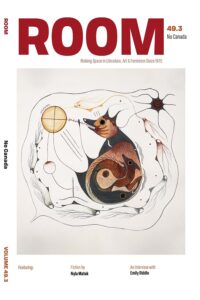
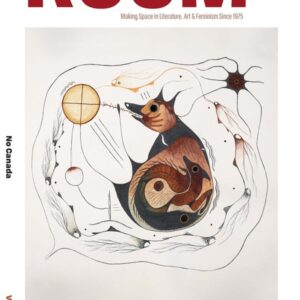
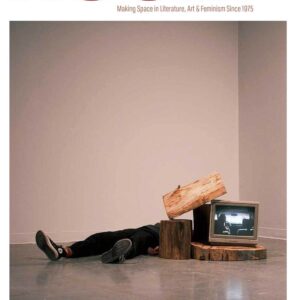
ROOM 49.3 NO CANADA
In the new era of CanCon, as feminists and writers it is our task to reject this Canadian exceptionalism, this too-comfortable back-patting. How can we begin to imagine alternative arts economies, Indigenous economies around art, that start with treaty, that align with BDS? What art, what literature, would such a system free us to create?
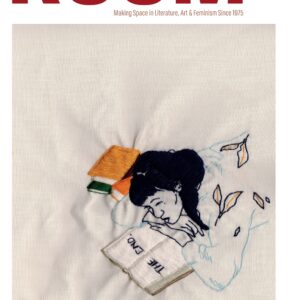
Order our previous issue
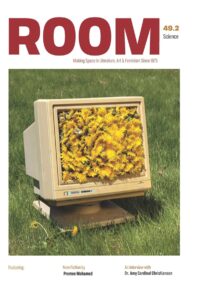
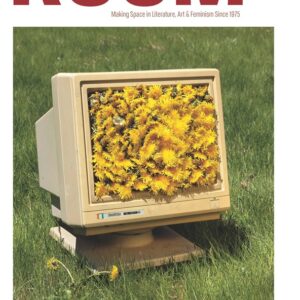
ROOM 49.2 Science
Welcome to the Science issue of Room Magazine, where we privilege questions: questions about how to construct better worlds; questions about how to destroy hyper-capitalistic, necropolitical systems; questions that beget questions and new questions.
Subscribe to our newsletter
Be the first to know about our contests, calls for submissions, and upcoming events.
Join us on Patreon
Seeking members who love literature, events, merchandise, and supporting marginalized creators.