Here
by Heidi Wicks
Breakwater Books
232 pages
$23
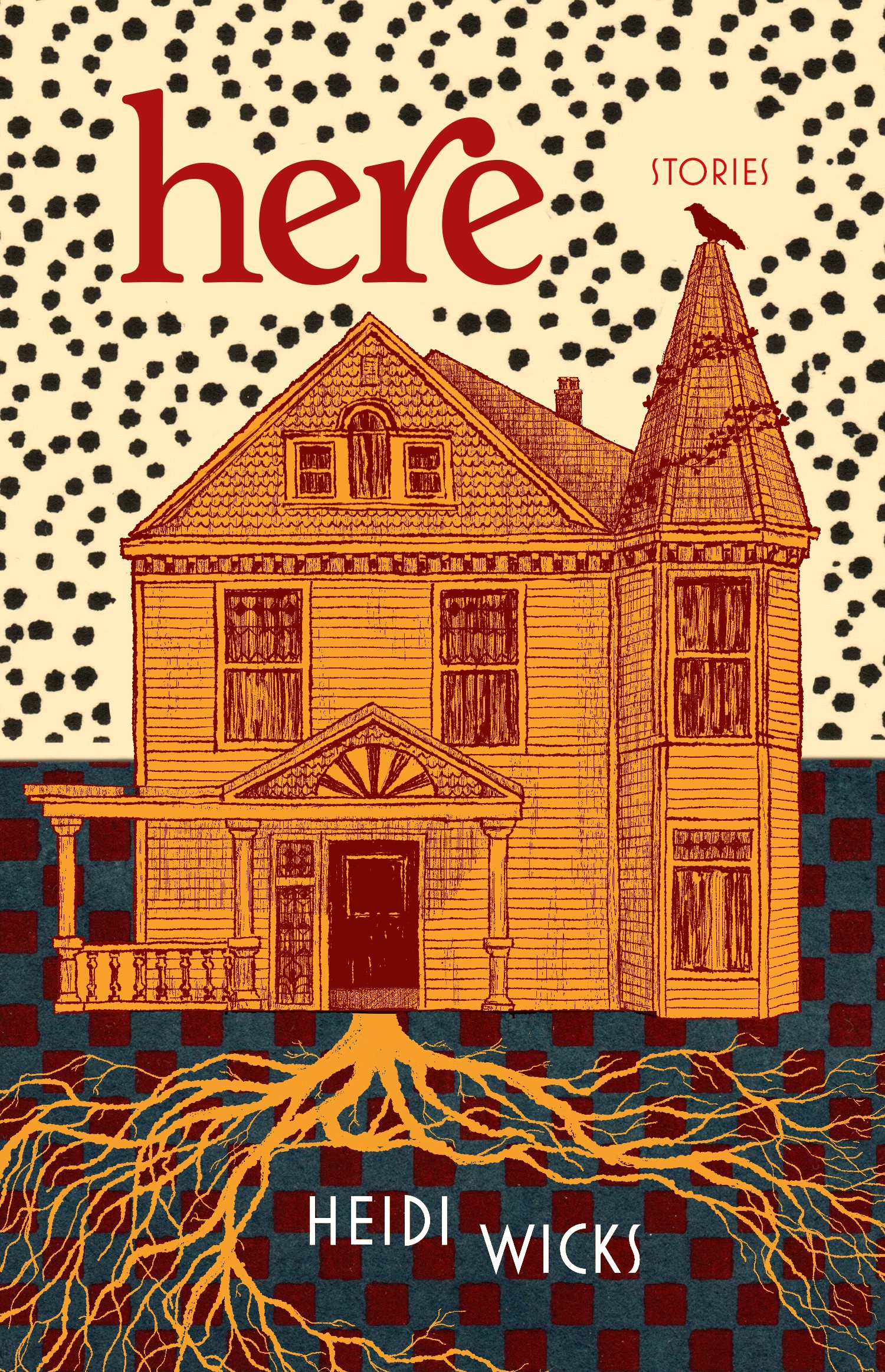
In Heidi Wicks’ Here, home is not a person; it is the legacy of those who once inhabited the spaces that shape us, even if we’ve never met them. From a twentieth-century aristocratic couple to a COVID-19-era dance teacher, Wicks’ second book traces the lives of those who once occupied a colonial mansion in St. John’s, Newfoundland. Unfolding over the course of more than a century, these twenty-two short stories reflect what a house represents in our collective imaginations.
The short stories of Here, at times, function more like vignettes: emotionally embedded snapshots of characters’ inner and outer worlds. Like a skilful photographer, Wicks’ narrative strength is her ability to play with focus, delegating certain details to the background and foregrounding others. The text touches on major international events, such as the Great Depression, but also highlights national events from a regional perspective, including Newfoundland’s vote to join the confederation.
Amid these momentous occasions, it is the intricacies of the everyday that come into focus through Wicks’ subtle, but resolute narrative voice—such as a depressed mother’s desire to purchase antiques upon her family’s move to Newfoundland during the 1992 cod moratorium. This focus on details highlights how the past is ever-present, carried by the physical spaces that once held these moments. The legacy of the past is most prominent when those exploring hidden tunnels remark how St. John’s houses contain “buried pasts everywhere,” highlighting its identity as a “wartime city.”
On a more sophisticated level, the sharpness of Wicks’ storytelling creates space for alternative connections—perhaps ones that can only exist in hidden corridors, side conversations, and peripheral furniture. There is a revolutionary quality to Here’s depiction of relationships: women cross socioeconomic, generational, and physical boundaries to protect each other. It is these feminist communities that leave a lasting impression, bringing forth questions of ownership and power. But just as quickly as these relationships are formed, they disappear, leaving room for the stories of succeeding occupants.
The ephemeral nature of Here encourages a rethinking of the “collective” that draws attention to our interconnectedness. How can we connect with each other in this universe, or as one character mentions, “multiverse,” when separated by time? The repeated mentioning of “ghosts”—an ever-expanding metaphor for faded love, historical forces, collective memories, and more—further highlights these shadows of the past. This ghostly framing compels readers to listen carefully for the hauntings in their own lives waiting to be acknowledged. With a clever title embodying its major themes, Here signals the merging of place with time, and the arrival of all that can be read through the opening of a single house.