
This Black History/Black Futures Month,
In the wake of the current iteration of political violence(s) that define our cultural, social, and political realities, we would be remiss not to draw links between our now and what has come before: the legacies of anti-Blackness, policing, state violence, systemic neglect, and some having the power to determine the fate of others — in other words, what Cameroonian historian and political theorist Joseph-Achille Mbembe terms necropolitics.
As all eyes turn to ICE’s continued displacement of families across the border, we must recall how Jamaican farmworkers have raised the alarm about the long-standing discriminations and violences perpetuated by the state in the interest of feeding “Canadian” citizens; the ongoing disappearances of young Black boys in the Greater Toronto Area; the legal and carceral harassment of community leaders like Taylor McNallie and Adora Nwofor in Moh’kinstsis, colonially known as Calgary (read our interview with them here, and learn about the work of #StopTheStack.)
This Black History/Black Futures Month, Room Magazine recommits to witnessing and honouring the long struggle against anti-Blackness globally, to actively contribute to a culture that supports, celebrates, and uplifts Black people, especially trans, disabled, poor, and female Black communities and individuals, both at home and in the Global South.
Black History / Black Futures Month Reading List
Just as Mbembe’s framework of necropolitics clarifies how power functions to upload structures such as white supremacy and anti-Blackness, we turn to the words of Black scholars, writers, thinkers, and revolutionaries to guide our actions, this month and in perpetuity.
From “A Litany for Survival,” by Audre Lorde, via BOMB Magazine
SO WHEN THE SUN RISES, WE ARE AFRAID
IT MAY NOT REMAIN
WHEN THE SUN SETS WE ARE AFRAID
IT MIGHT NOT RISE IN THE MORNING
WHEN OUR STOMACHS ARE FULL WE ARE AFRAID
OF INDIGESTION
WHEN OUR STOMACHS ARE EMPTY WE ARE AFRAID
WE MAY NEVER EAT AGAIN
WHEN WE ARE LOVED WE ARE AFRAID
LOVE WILL VANISH
WHEN WE ARE ALONE WE ARE AFRAID
LOVE WILL NEVER RETURN
AND WHEN WE SPEAK WE ARE AFRAID
OUR WORDS WILL NOT BE HEARD
NOR WELCOMED
BUT WHEN WE ARE SILENT
WE ARE STILL AFRAID
SO IT IS BETTER TO SPEAK
REMEMBERING
WE WERE NEVER MEANT TO SURVIVE.
From Blood In My Eye, by George Jackson
“Consciouness is the opposite of indifference, of blindness, of blankness. Promoting consciousness involves the general dissemination of the concept that each of us is part of a universal action and interaction; that the poles are somewhere connected; that the are material causes for trauma, vertigo, degenerative disease. Connections, connections, cause and effect, clarity on their relation and interrelations, the connection with the past, continuity, flow movement, the awareness that nothing, nothing remains the same for long. And it follows that if a thing is not building, it is certainly decaying–that life is revolution–and that the world will die if we don’t read and act out its imperatives. Not on its own will it die, but rather because the fores of reaction have created imbalances that will kill it: “The seeds of its own destruction.” Our destruction too—in the epoch of the Bomb, the nerve gases, the massive precipitation of industrial wastes.”
From “Speech to the Young: Speech to the Progress-Toward (Among them Nora and Henry III),” by Gwendolyn Brooks, via Poetry Society of America
Say to them,
say to the down-keepers,
the sun-slappers,
the self-soilers,
the harmony-hushers,
“Even if you are not ready for day
it cannot always be night.”
You will be right.
For that is the hard home-run.
From “The Way We Future: Terese Mason Pierre Interviews Whitney French”, via Room 47.1 Utopia
Whitney French: “What matters to me most is being responsible for the images, stories, and languaging about utopias, dystopias, apocalypses, and futures. Being responsible for conceiving something and considering the multiple generations onward. Doing that labour of collaboration. Our kids and our elders are living, breathing time machines. We have access to perspectives of generations before us and after us. To the more spiritually inclined, you can argue we have access to our ancestors (blood and chosen) and our descendants (blood and chosen). We can commune with those who have transitioned and those who have yet to be.”
From “June Jordan’s Poetry for the People: A Revolutionary Blueprint,” by June Jordan, via Yale University Library
“And so poetry is not a shopping list, a casual disquisition on the colors of the sky, a soporific daydream, or bumpersticker sloganeering. Poetry is a political action undertaken for the sake of information, the faith, the exorcism and the lyrical invention, that telling the truth makes possible. Poetry means taking control of the language of your life. Good poems can interdict a suicide, rescue a love affair and build a revolution in which speaking and listening to somebody becomes the first and last purpose to every social encounter.”
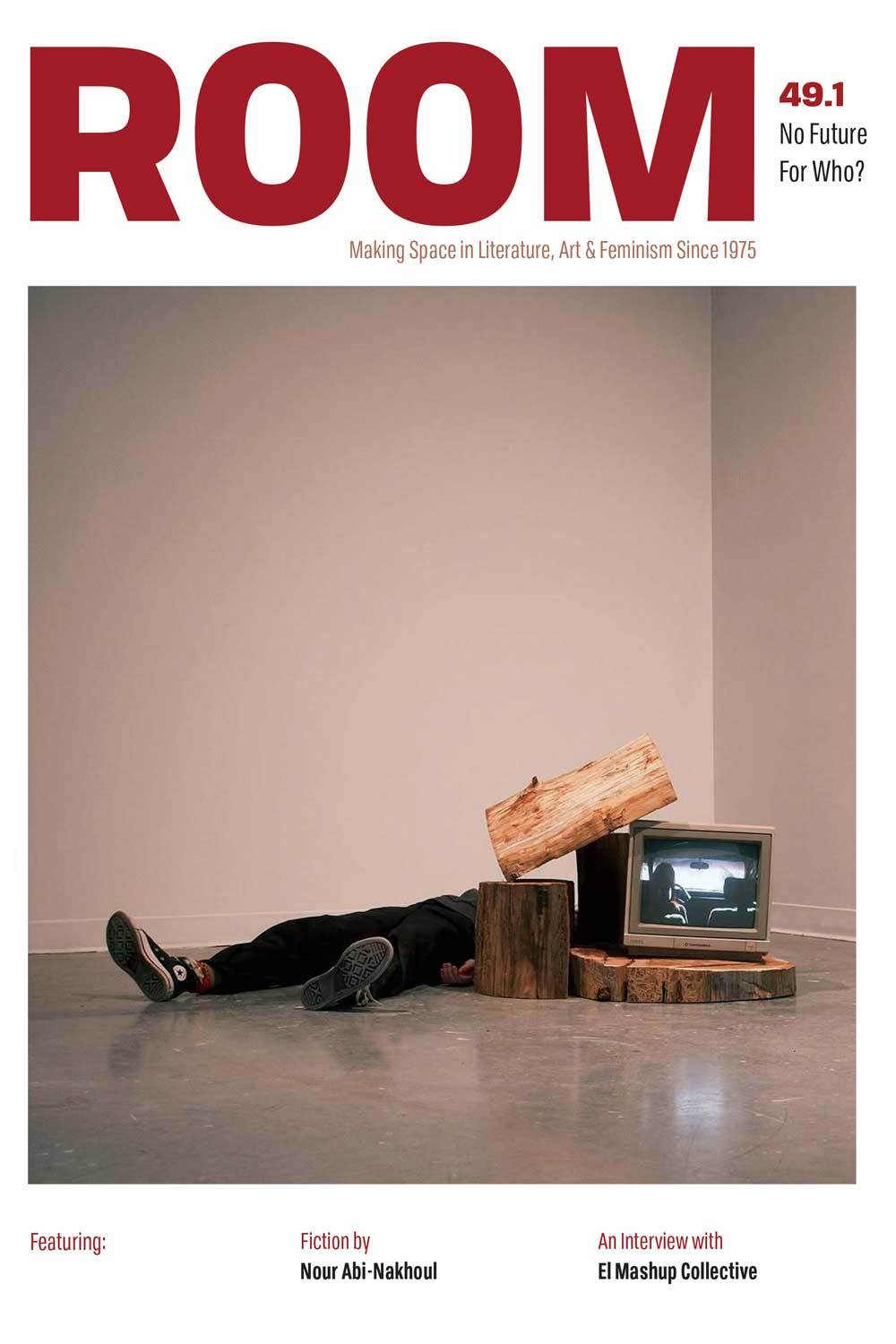
From “‘Activism isn’t about perfection—it must grow toward humanity for all’: Chimedum Ohaegbu and Francesca Pacchiano interview Stop the Stack YYC organizers Taylor McNallie & Adora Nwofor”, via Room 49.1: No Future For Who?
Adora Nwofor: “I continue to resist the system because humanity first. I care about humans and I’m human so I continue to fight. I won’t stop, and there are many ways to support causes, people, and work towards abolition. I am prioritizing joy at this time in my life. What do we do when empire crumbles? I like to think we are working toward joy and I’d like to be well-versed in joy. Activism isn’t about perfection—it must grow toward humanity for all, which really means the end of oppression as acceptable.”
From The Wretched of the Earth, by Frantz Fanon
“During the period of decolonization, the native’s reason is appealed to. He is offered definite values, he is told frequently that decolonization need not mean regression, and that he must put his trust in qualities which are welltried, solid, and highly esteemed. But it so happens that when the native hears a speech about Western culture he pulls out his knife—or at least he makes sure it is within reach. The violence with which the supremacy of white values is affirmed and the aggressiveness which has permeated the victory of these values over the ways of life and of thought of the native mean that, in revenge, the native laughs in mockery when Western values are mentioned in front of him. In the colonial context the settler only ends his work of breaking in the native when the latter admits loudly and intelligibly the supremacy of the white man’s values. In the period of decolonization, the colonized masses mock at these very values, insult them, and vomit them up.”
From “anti poetica,” by Danez Smith, from Bluff
there is no poem greater than feeding someone
there is no poem wiser than kindness
there is no poem more important than being good to children
there is no poem outside love’s violent potential for cruelty
there is no poem that ends grief but nurses it toward light