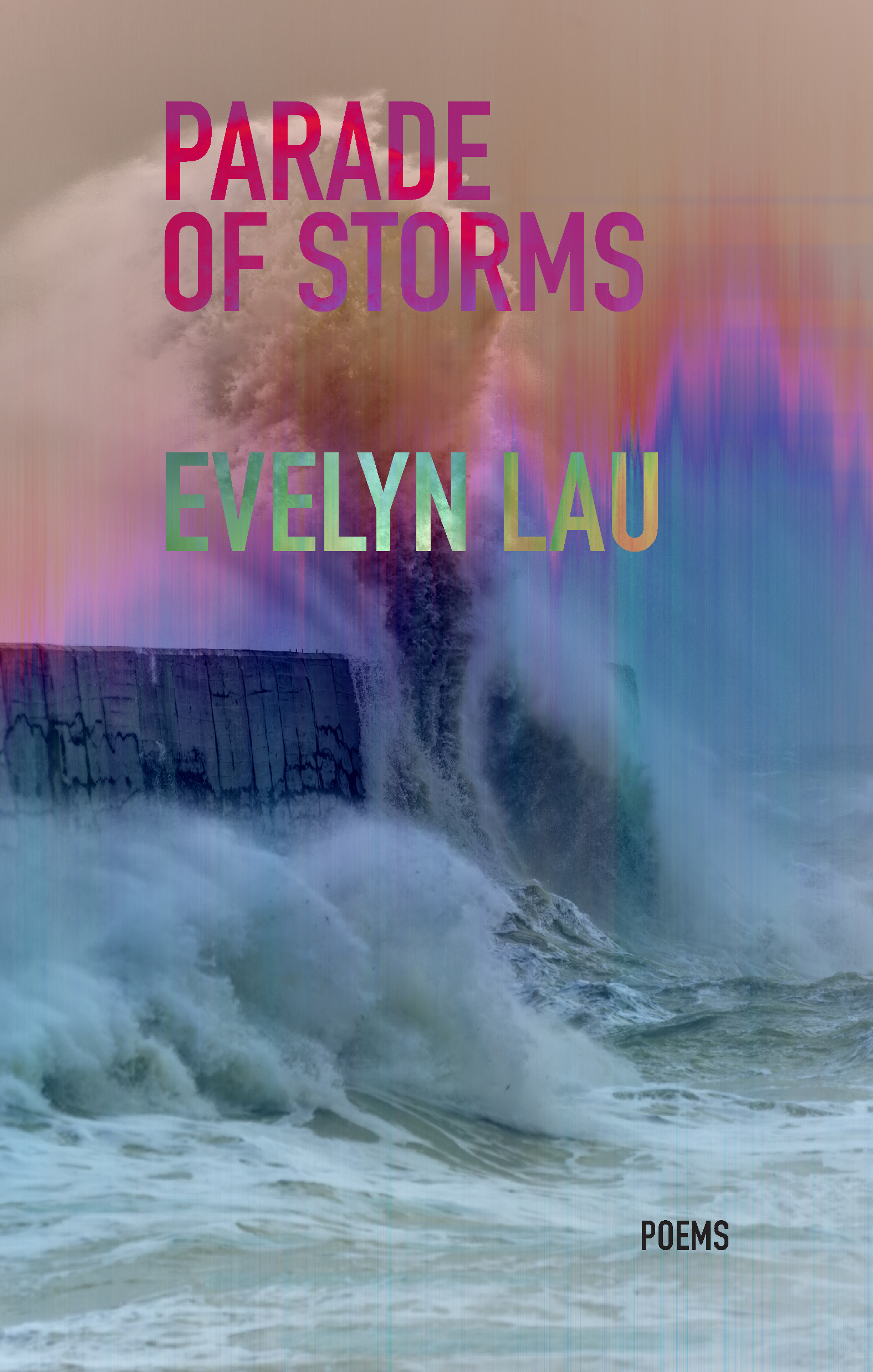
Parade of Storms
by Evelyn Lau
Anvil Press
76 pages
$18
In her tenth poetry collection, former Vancouver poet laureate Evelyn Lau places weather at the forefront, interweaving reflections on grief, illness, and mortality. Divided into five sections, Lau’s work explores not only the tempests of nature but also inner turbulences—the sorrow, vulnerability, and upheavals that can shape a life.
Among the many “storms” Lau examines is one we all endured: the pandemic, a different kind of tempest beyond weather. Lau reflects on the early days of it, capturing the disorientation of adapting to a new normal in her poem “Dull Emergency,” where she writes of “open-ended days” consumed by the “dull emergency of the daily count.” She adds, “there’s little to say but we still mumble behind our masks, eyes widening or squinting in exaggerated empathy or sorrow, desperate to communicate.” Lau’s pandemic-related poems infuse the collection with a sense of urgency, evoking a time not so long ago when we faced our own unrelenting storms and feared they might never end.
I found the most resonant part of the book to be Part One, titled “Atmospheric River,” because of Lau’s ability to take familiar places—such as the Coquihalla Highway or the town of Merritt, B.C.—and juxtapose their before-and-after states with haunting clarity. Her poems reveal not just the physical transformation wrought by catastrophe, but the emotional weight carried in the wreckage. Writing about floods that engulfed the region, she observes, “now you cling to life / like any stubborn old thing.”
Each poem in this collection is meticulously infused with vivid details that immerse the reader, evoking the sensation of accompanying Lau as she navigates her experiences firsthand. Her ability to render weather as an intimate presence, rather than a detached, reportable event, adds a deeply personal dimension to her work.
Lau’s sustained use of striking imagery is particularly compelling, as is her talent for juxtaposing gritty, unflinching moments with unexpected tenderness and beauty. In the poem “Kintsugi,” for instance, she contrasts “sidewalks based with excrement, slimed with dumpster trash, spiked with needles” with the image of “cherry blossoms mend[ing] the seams of sidewalks, like gold repairing what’s broken,” illustrating her gift for finding grace amid ruin.
While engaging with the broader unease of the climate crisis, Parade of Storms gains poignancy through Lau’s reflections on personal loss, including caring for a loved one in hospice. This collection quietly shows that although we may experience the same environmental events, each of us navigates them—and our own storms—in a different way.