Encampment: Resistance, Grace, and an Unhoused Community
by Maggie Helwig
Coach House Books
176 pages
$25
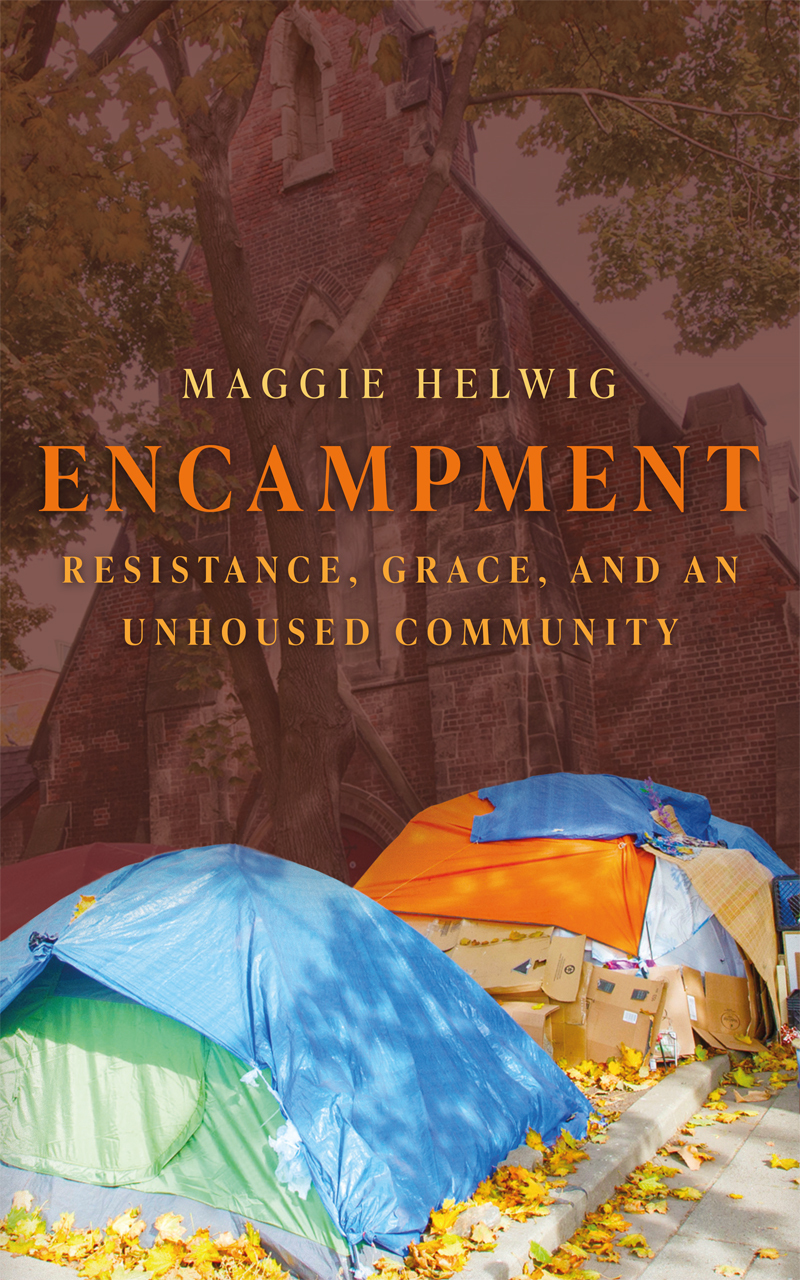
In Encampment, a hard-hitting, soft-spoken melee of memoir, homily, and exposé, Maggie Helwig lays bare Toronto’s homelessness crisis and the systems underpinning it. With frustration, understanding, and remarkably little judgement, Helwig—a priest and activist—paints a picture of a vibrant, caring, creative, and messy encampment that flourished in the yard of her Anglican church in the spring of 2022, and her fight to keep it open.
She brings to light clumsy and costly municipal mechanisms like Central Intake, a telephone-based overnight accommodation referral service that does more data-tracking than finding people actual places to stay. Those with cellphones wait endlessly on hold, only to be told no shelter is available—or to try their luck at 129 Peter Street, where they might find a vacant chair for the night.
She describes efforts made to clear the churchyard: the large mechanical “claw” that grabbed people’s few precious belongings, the massive concrete blocks left in the yard to prevent tents from being erected, and the endless stream of eviction notices: first a warning, then a reversal, then the inevitable arrival of cops and city workers to clear the site anyway. Homelessness, Helwig points out, “is more than anything else, a life of constant displacement” that offers no reliable haven.
Encampment often turns the pulpit over to others—giving voice to the citizens, custodians, and seers who create and re-create home.
Helwig’s empathy stretches to include fearful complaining neighbours, dedicated community workers, and local politicians. While she does not sugar-coat the issues of drug abuse, mental illness, and violence that plague the unhoused, or paint those living in the encampment as saintly or closer to God, she does observe repeatedly that “it is the broken people who will run, over and over, to save strangers when everyone else is too afraid.” Fear, Helwig suggests, seems only to haunt those who have much to lose.
Encampment tears a hole in the flimsy, precarious veneer of security that separates the world of vulnerability and dislocation from the one of relative comfort: “We are taught, most deeply and most consistently, not to be fragile. Not to be weak, or needy, or breakable. We are taught to despise fragility.” Helwig recognizes strength, fearlessness, and resilience in that fragility. She celebrates what it takes to wake up each harsh day and still find compassion for others. As for fear, she writes, “I have felt safer here than in most other places, hard as it has sometimes been.” Encampment doesn’t end in victory—the tent community was cleared by the city in 2023—but every loss it illuminates demands attention.